tackling phosphorus hotspots
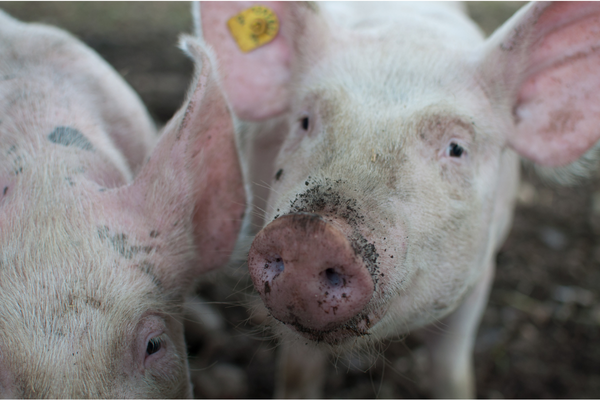
Add your voice to the call for a review of Manitoba’s hog industry!
We’re asking our members to contact Minister Moyes to urge him to engage the Clean Environment Commission in a fulsome review of Manitoba’s hog industry.
evidence-based investment
Phosphorus data generated by the Lake Winnipeg Community-Based Monitoring Network must guide federal funding to protect Lake Winnipeg through the Lake Winnipeg Freshwater Ecosystem Initiative. Evidence-based investment is the only way to ensure measurable results and long-term impact.
We expect targeted investment in persistent, recurring phosphorus hotspots, as well as robust phosphorus monitoring and strong accountability measures to ensure effective delivery of proposed outcomes.
We’re also calling for a federal funding program that supports Indigenous peoples in reclaiming and restoring their relationship with water, and enables Indigenous rightsholders and governments to participate fully and meaningfully in water governance and knowledge-sharing.
Realizing the Full Potential of Community-Based Monitoring
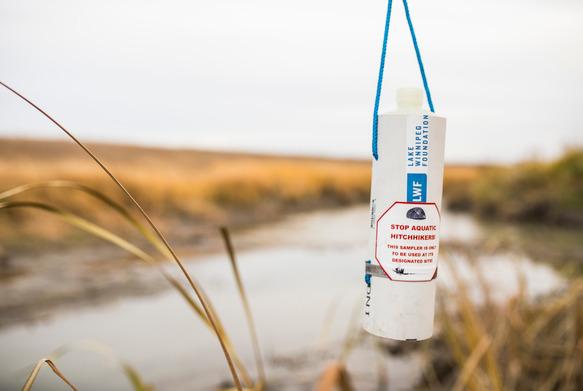
Our federal policy brief highlights how phosphorus data generated by the Lake Winnipeg Community-Based Monitoring Network (LWCBMN) can support regional decision-making and funding allocation, and urges any renewed federal program to explicitly recognize the value of LWCBMN data in order to effectively complete the data-to-impact cycle.


Grading the federal government’s performance on Lake Winnipeg
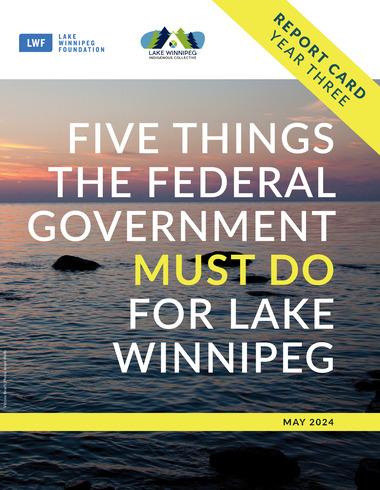
Together with the Lake Winnipeg Indigenous Collective, we continue to monitor progress on recommendations originally presented in our 2020 position paper, Five Things the Federal Government Must Do for Lake Winnipeg. Our latest report card highlights urgent next steps the federal government must take to meet its own objectives to protect and restore Lake Winnipeg’s water quality and ecosystem health, and to implement the United Nations Declaration on the Rights of Indigenous Peoples (UNDRIP).