
understanding algae blooms
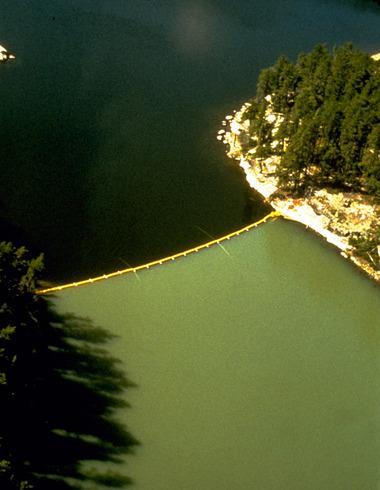
In the 1960s, when thick green scum began to spread across the Great Lakes, the Canadian government recognized the need to better understand the causes and possible controls of algae blooms. A remote region in northwestern Ontario, called the Experimental Lakes Area, was set aside for this purpose. This special research site included 46 small, deep lakes and their watersheds. The first experiments conducted at the Experimental Lakes Area (now known as IISD-ELA) tested several different nutrients to identify the cause of algae blooms on freshwater lakes. In the middle of Lake 226, a plastic curtain was installed. Carbon and nitrogen were added to one side of the lake, while carbon, nitrogen, and phosphorus were added to the other side. Only the half that received phosphorus produced algae blooms.
Another ongoing experiment, on Lake 227, is the world’s longest-running controlled study on algae blooms. At first, researchers routinely dosed the lake with excessive amounts of both phosphorus and nitrogen. Over the years, the amount of nitrogen added was gradually decreased and, in 1990, researchers stopped adding it completely. Algae blooms continued to appear in Lake 227 with the same intensity because of the ongoing addition of phosphorus. Nitrogen reduction had no effect.
IISD-ELA experiments have consistently shown that reducing phosphorus alone can effectively control algae blooms. These large-scale studies are conducted over entire ecosystems, reflecting real-world conditions better than small-scale laboratory studies. As such, the scientific conclusions from these whole-ecosystem experiments provide the most reliable evidence to help us manage lakes in real life.
focus on phosphorus
Evidence from IISD-ELA experiments has informed water policy in jurisdictions across Canada and around the world. IISD-ELA research guides the work of the Canada Water Agency and the International Joint Commission and underpins the Great Lakes Water Quality Agreement.
Unfortunately, in Manitoba, water-quality policy has ignored IISD-ELA research. For decades, the Manitoba government has mandated nitrogen reduction, despite straightforward evidence from IISD-ELA showing this will not reduce algae blooms in freshwater lakes. The continued emphasis on nitrogen reduction in Manitoba distracts from the need to focus on phosphorus and has significantly delayed progress in protecting Lake Winnipeg.
fighting algae blooms on lake winnipeg
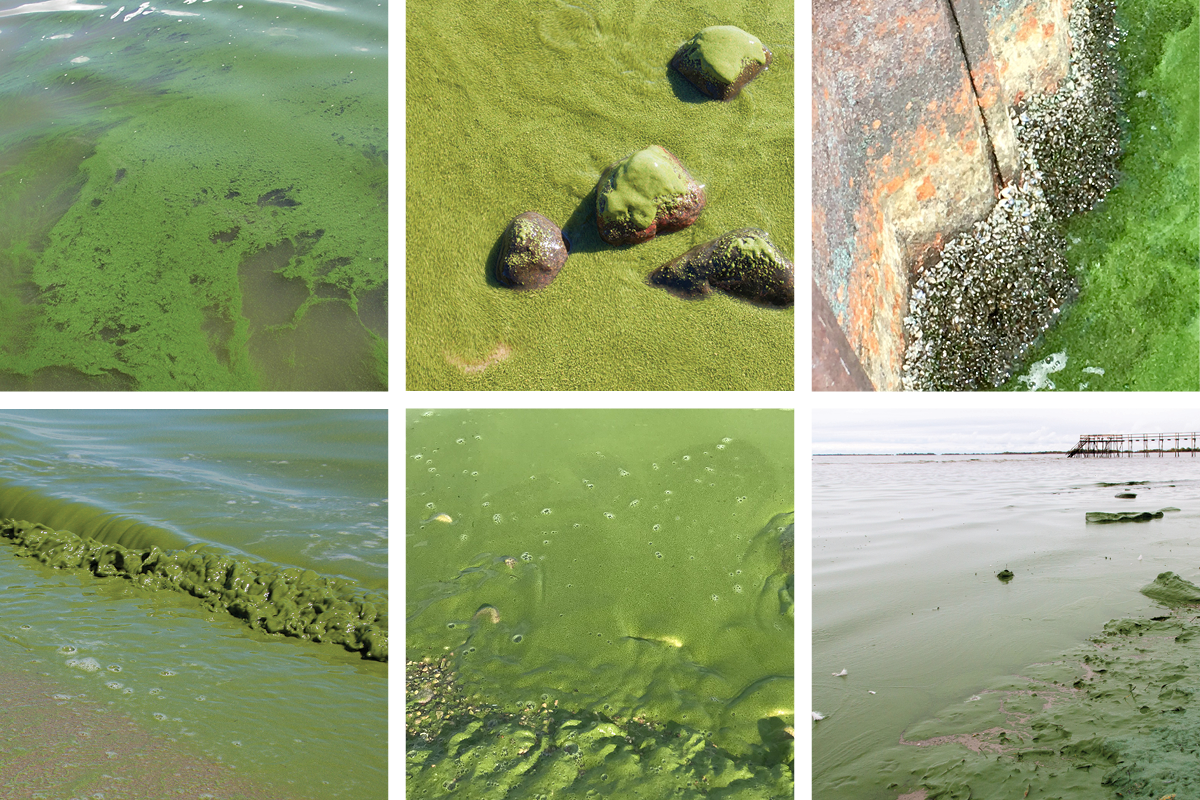
Together with our members, LWF advances evidence-based solutions to manage the largest sources of phosphorus feeding Lake Winnipeg’s algae blooms.
Phosphorus enters a lake from its surrounding watershed, the area of land that drains into the lake. Lake Winnipeg’s watershed covers a huge area. It stretches from the Rocky Mountains, across the prairies, into the Canadian Shield, and nearly reaches Thunder Bay. The watershed extends south of the border into the states of North Dakota and Minnesota, with small segments dipping into South Dakota and Montana.
Managing phosphorus runoff across this entire landscape is challenging, complicated, and costly. We need to be strategic and evidence-based in our approach to reduce Lake Winnipeg’s algae blooms, by focusing on the largest sources of phosphorus and working our way down the list. This targeted approach to phosphorus reduction efforts is critical to our success.
evidence-based solutions
Some of the phosphorus reaching Lake Winnipeg comes from concentrated, localized sources such as sewage treatment plants. Phosphorus loading from these facilities can be greatly reduced using widely adopted and effective technologies.
In fact, sewage treatment plants around the eastern Great Lakes were upgraded to meet strict phosphorus limits back in the 1980s, in response to IISD-ELA's first studies.
The same research and proven technological solutions must be used to accelerate phosphorus compliance at Winnipeg’s North End Water Pollution Control Centre. This treatment plant is the single largest source of phosphorus to Lake Winnipeg and is non-compliant with phosphorus limits set over 20 years ago. Meeting phosphorus limits at Winnipeg’s north end sewage treatment plant is within reach, and it needs to be a priority.
But we can’t stop at sewage treatment. Most of the phosphorus that reaches Lake Winnipeg comes from dispersed sources such as farm runoff, floodwater, and land drainage. These sources are harder to assess and manage. That’s why LWF is working to identify phosphorus hotspots, areas within the watershed that contribute high levels of phosphorus to Lake Winnipeg. Once we’ve located these phosphorus hotspots, we can better target research, investment, and policy solutions.
monitoring what matters
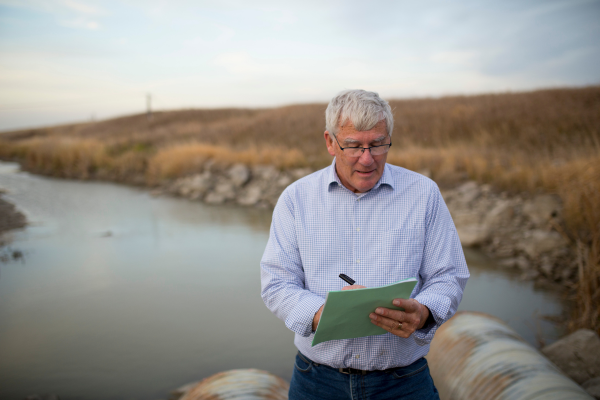
The Lake Winnipeg Community-Based Monitoring Network (LWCBMN), led by LWF, is a network of volunteers and watershed districts collecting water samples to measure phosphorus in the Lake Winnipeg watershed.